Context
SAGE was built for remote esports productions where the game still needs to be covered like a traditional broadcast.
Some titles do not offer observer clients or any clean way to view the match outside the players’ perspective. Before SAGE, those shows relied on ad hoc one-feed-per-PC workflows that were difficult to scale, route, and keep visually consistent in a live studio environment.
The system centralizes remote ingest, data aggregation, and output assignment so operators and producers can bring Twitch, YouTube, Kick, and similar player streams into broadcast-ready OBS engines across distributed machines.
Each engine maps to a specific upstream row and can be remapped as production needs change, while graphics updates such as player and team names stay synchronized with the selected output.
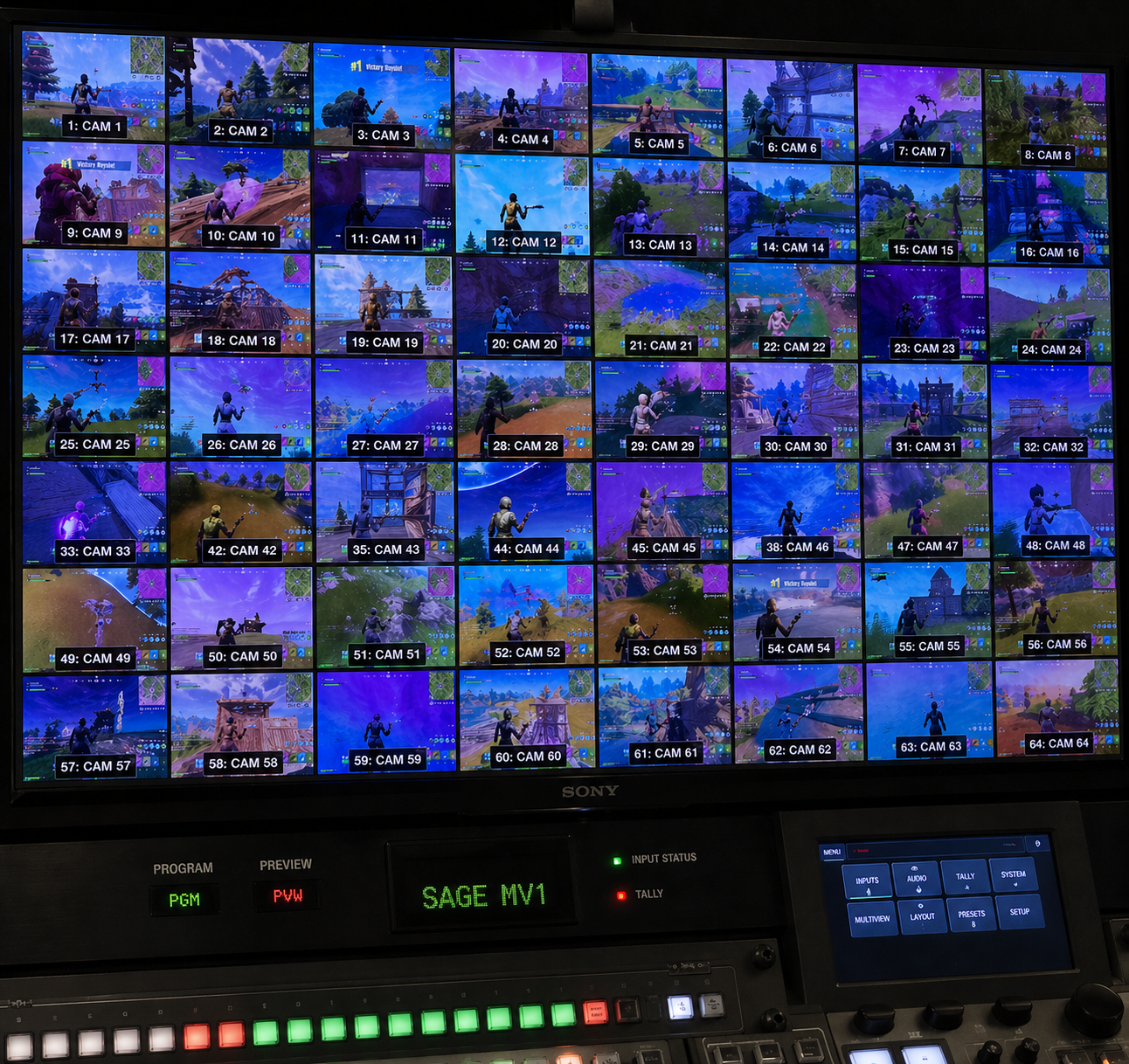
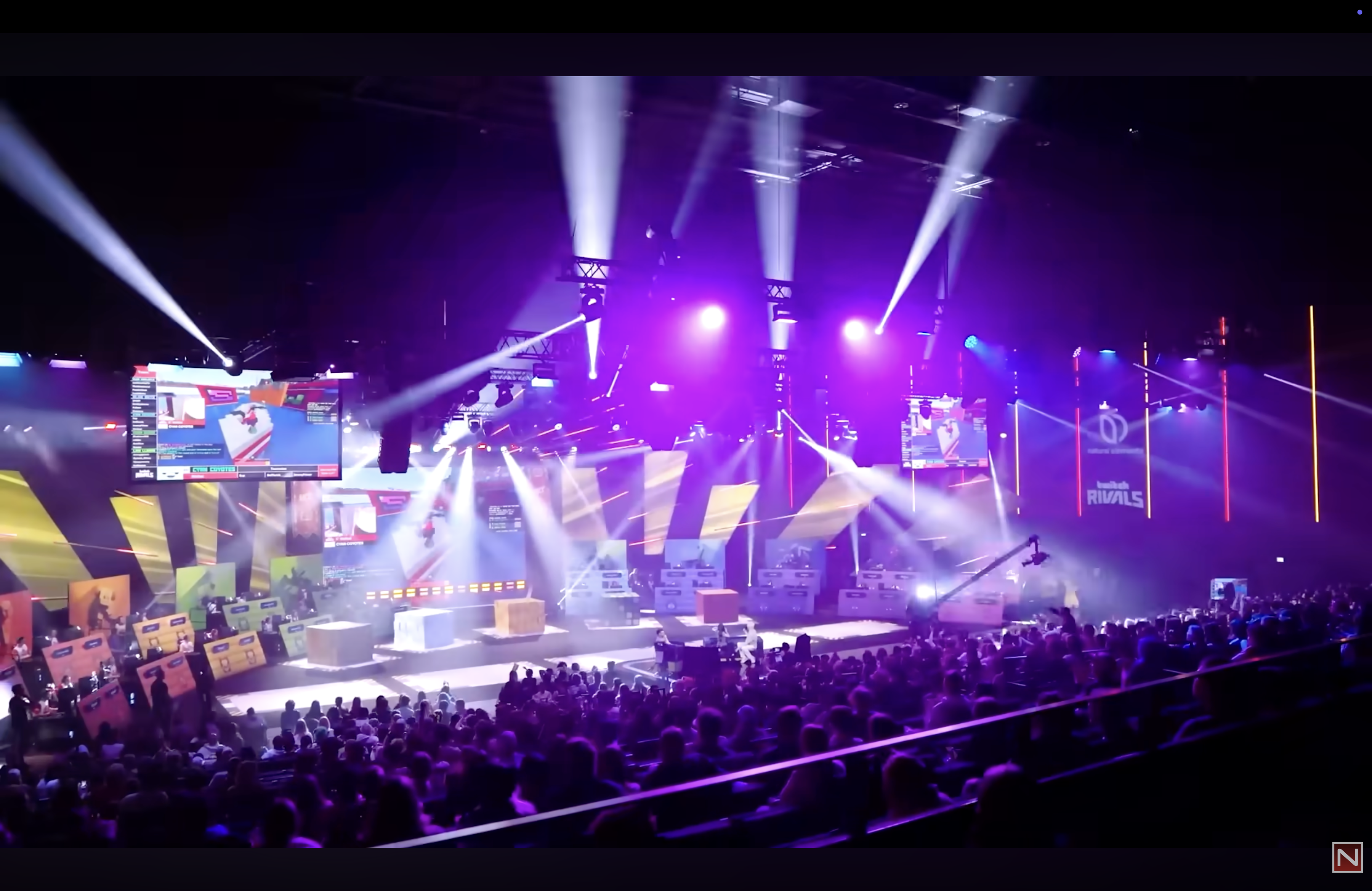
The platform was developed incrementally over the last three years across dozens of productions, including World Series of Warzone, and has scaled to 40+ simultaneous outputs feeding a local broadcast switcher.
Approach
SAGE was designed as a centralized control plane for distributed OBS execution.
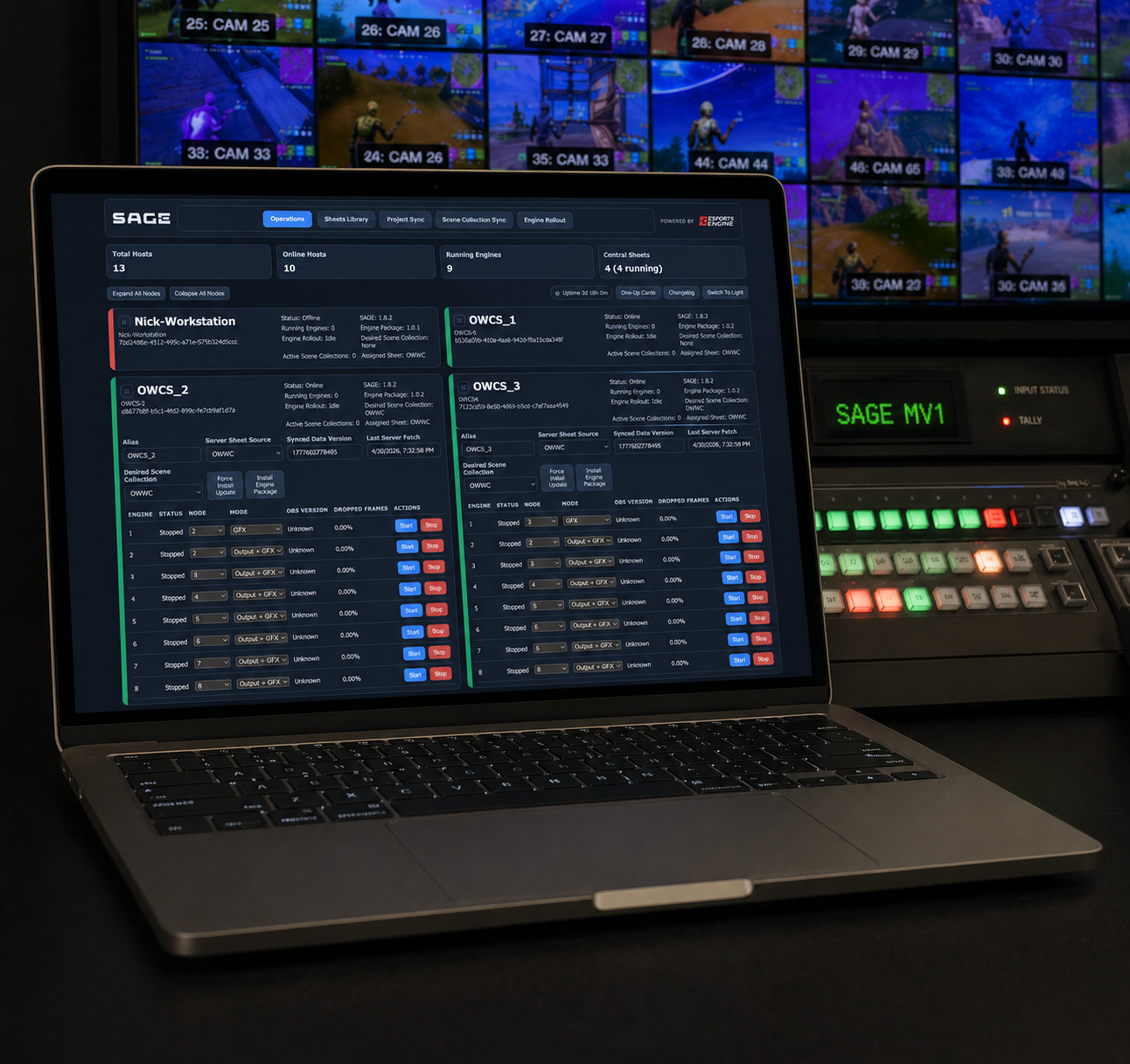
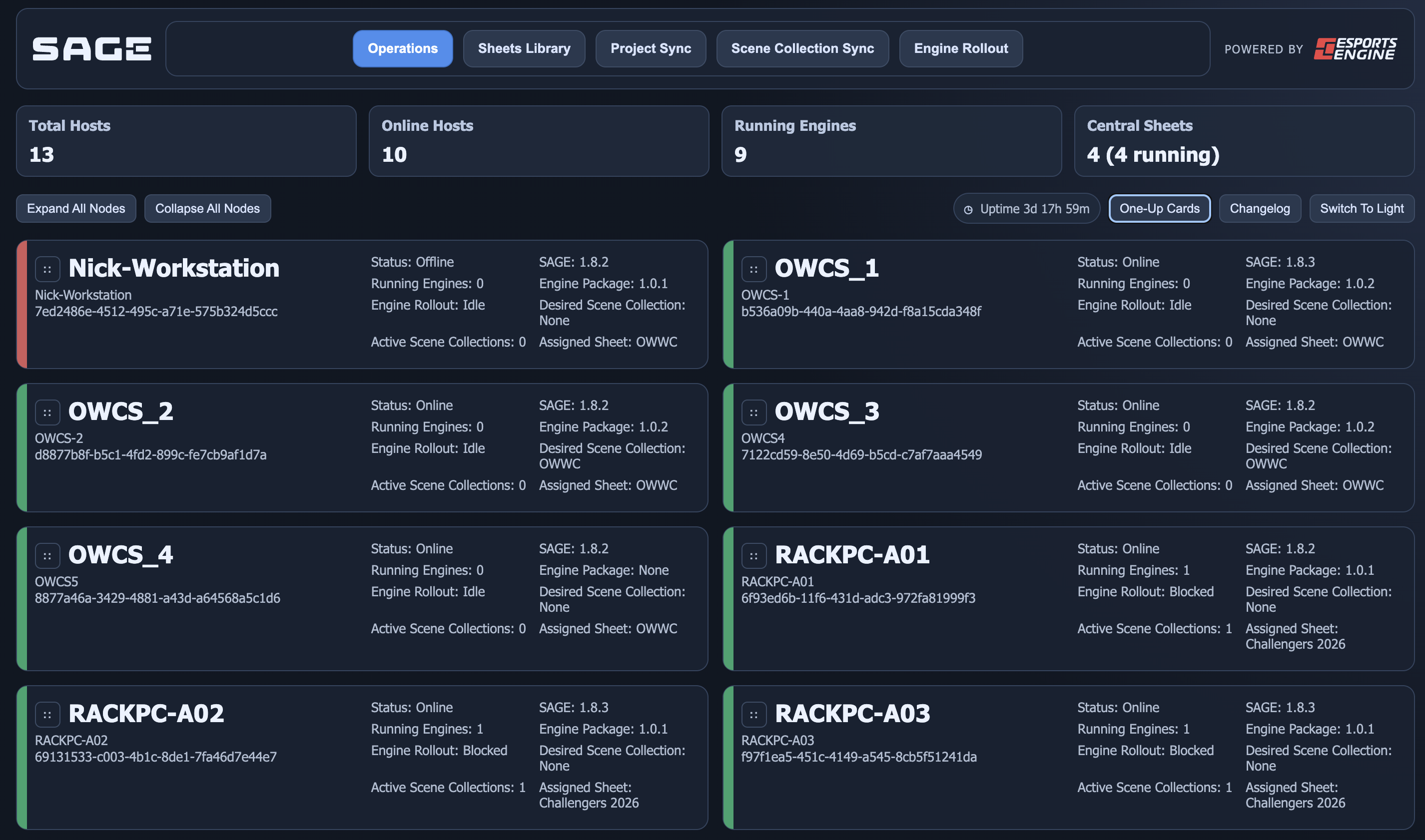
A local app running on each target machine can launch up to eight OBS engines, with every engine mapped to a specific upstream Google Sheet row that defines the active feed and graphics state.
Those mappings can be reassigned live, giving operators a way to redistribute coverage quickly without rebuilding machine-level configurations.
On the ingest side, the system opens supported Twitch, YouTube, Kick, and similar web streams, identifies the source payload, and injects the live stream into OBS browser sources over WebSockets.
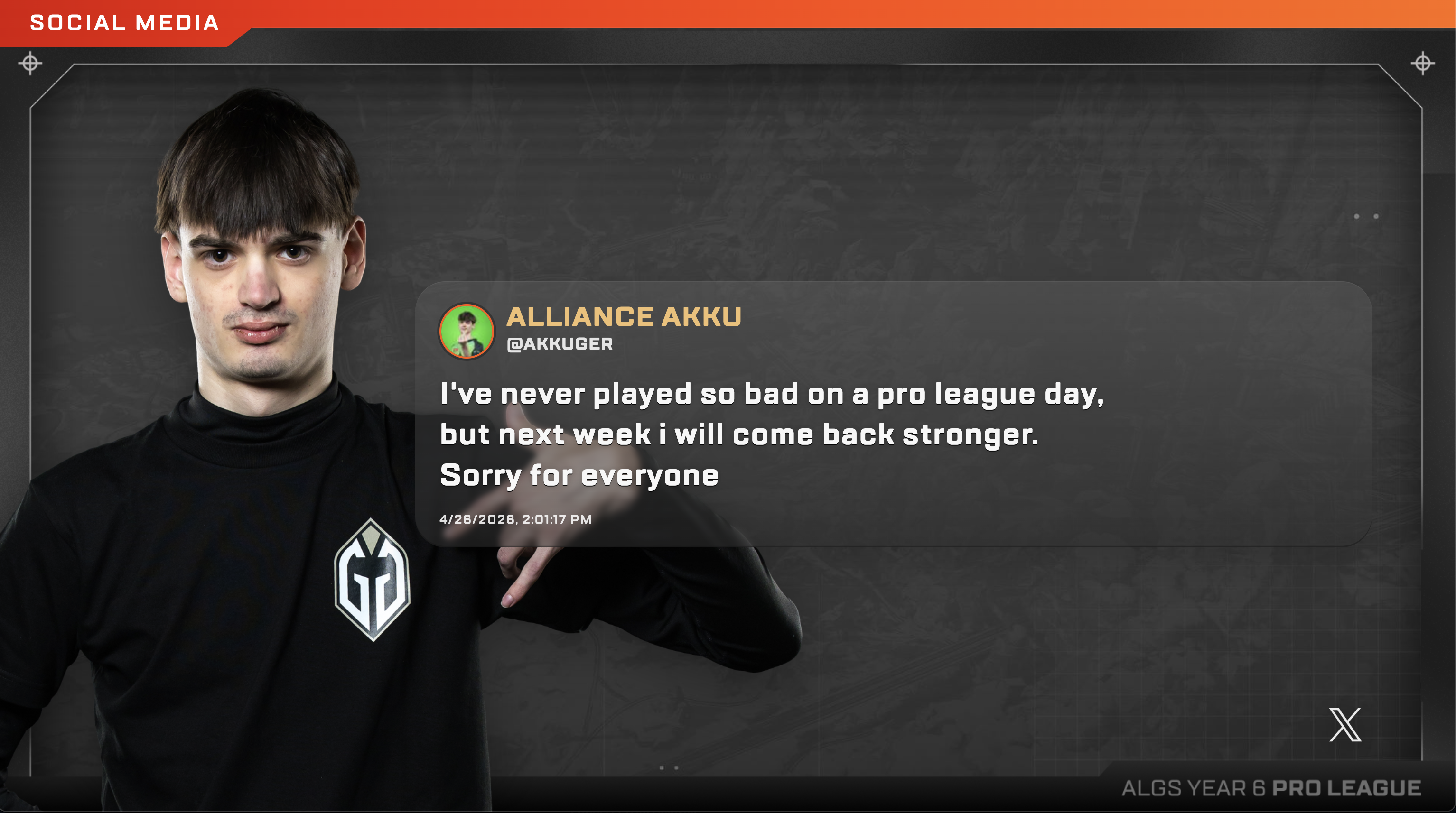
From there, SAGE manages the object-level updates needed to treat OBS like a lightweight graphics engine, including swapping large image sets, updating text fields, and changing colors so player and team information stays aligned with the selected output.
Deployment was also part of the design problem, so the platform was built to favor centralized rollout and remote updates rather than one-off studio installs.
Outcome
The result was a system that replaced fragile one-feed-per-PC workflows with a scalable, repeatable production model for remote esports coverage.
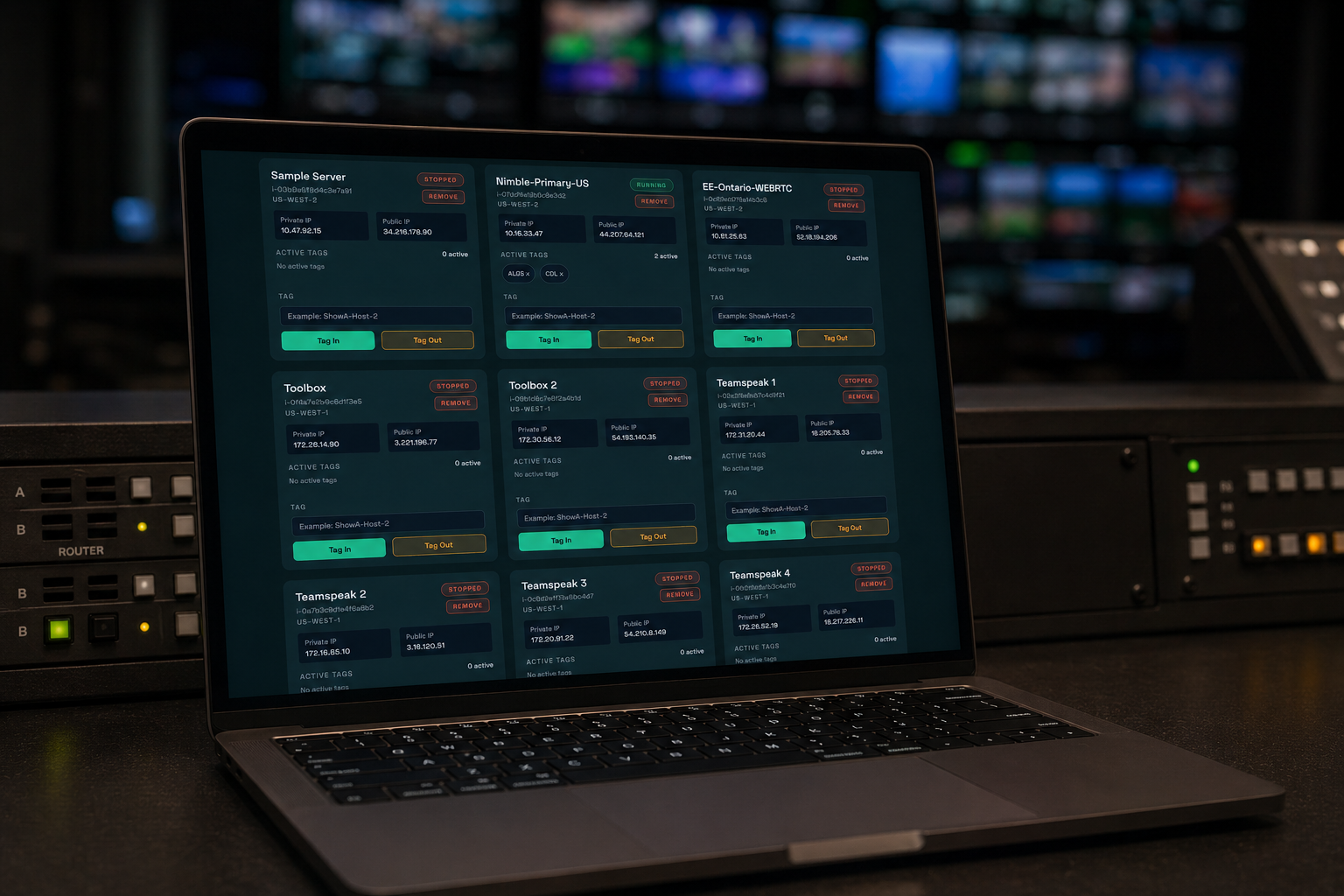
Operators gained a single dashboard for machine status, engine assignment, graphics control, and stream health.
Producers could adapt coverage without rebuilding the show around ad hoc hardware layouts.
Over time, SAGE became the backbone for dozens of productions and proved its value at broadcast scale.
The platform has driven 40+ simultaneous outputs from cloud-managed control to a local switcher, while reducing deployment friction, improving consistency across graphics updates, and making remote games without observer clients practical to cover in a live studio environment.